


This browser is not actively supported anymore. For the best passle experience, we strongly recommend you upgrade your browser.
Norton Rose Fulbright logo
  • Global
  • About
    • Our firm
      • Clients
      • Global coverage
      • Vision, culture and people
      • Governance structure
      • Risk management
      • NRF Transform
      • Alumni
    • Diversity, Equity & Inclusion
      • Strategy, goals and priorities
      • Governance and policy
      • Resource groups
    • Responsible business
      • Volunteering
      • Fundraising
      • Sustainable practice
      • Global charitable initiatives
      • Responsible use of AI
  • People
  • Services
    • Services A-Z
    • Key industries
      • Consumer markets
      • Energy, infrastructure and resources
      • Financial institutions
      • Life sciences and healthcare
      • Technology
      • Transport
    • Practices
      • Antitrust and competition
      • Banking and finance
      • Climate change and sustainability
      • Corporate, M&A and securities
      • Cybersecurity and data privacy
      • Employment and labor
      • Energy
      • Environmental, social and governance (ESG)
      • Financial services and regulation
      • Intellectual property
      • Litigation and disputes
      • Projects
      • Real estate
      • Regulation and investigations
      • Restructuring
      • Risk advisory
      • Tax
    • Practices
      • Antitrust and competition
      • Banking and finance
      • Climate change and sustainability
      • Corporate, M&A and securities
      • Cybersecurity and data privacy
      • Employment and labor
      • Energy
      • Environmental, social and governance (ESG)
      • Financial services and regulation
      • Intellectual property
      • Litigation and disputes
      • Projects
      • Real estate
      • Regulation and investigations
      • Restructuring
      • Risk advisory
      • Tax
      • Banking and finance
      • Corporate, M&A and securities
      • Employment and labor
      • Environmental, social and governance (ESG)
      • Intellectual property
      • Projects
      • Regulation and investigations
      • Risk advisory
    • NRF Transform
    • Transform image

      Find out more
  • Insights
    • Publications Podcasts Blogs
    • Webinars and events Videos
    • Professional development Resources and tools
    • colorful light particles
      Trending topics
      • Artificial intelligence
      • Data centers
      • Energy transition
      • International trade and tariffs
    • Trending topics
      • Artificial intelligence
      • Data centers
      • Energy transition
      • International trade and tariffs
  • News
    • Press releases
    • Market recognitions
    • Media information
  • Locations
  • Careers
    • Graduates and students
    • Search current vacancies
  • Careers
    • Graduates and students
    • Search current vacancies
  • Change
  • Global
    • global site
    • North America
      • Canada (English)
      • Canada (Français)
      • United States
    • Latin America
    • Europe
      • Belgium
      • Deutschland (Deutsch)
      • France
      • Germany (English)
      • Greece
      • Italy
      • Luxembourg
      • Poland
      • The Netherlands
      • Turkey
      • United Kingdom
    • Middle East
    • Africa
      • Morocco
    • Asia Pacific
      • Australia
      • China
      • Hong Kong SAR
      • Indonesia
      • Japan
      • Singapore
      • Thailand
    • Regional practices
      • India
      • Israel
      • Korea
      • Marshall Islands
      • Nordic region
      • Pakistan
      • Vietnam
Lake in the forest

Connections

Insights, perspectives and viewpoints from our lawyers on topical issues

All Posts Subscribe
print-logo
7/13/2026 5:01:05 PM | 4 minute read

ECJ opens the door for sports federations to regulate agents but sets clear limits

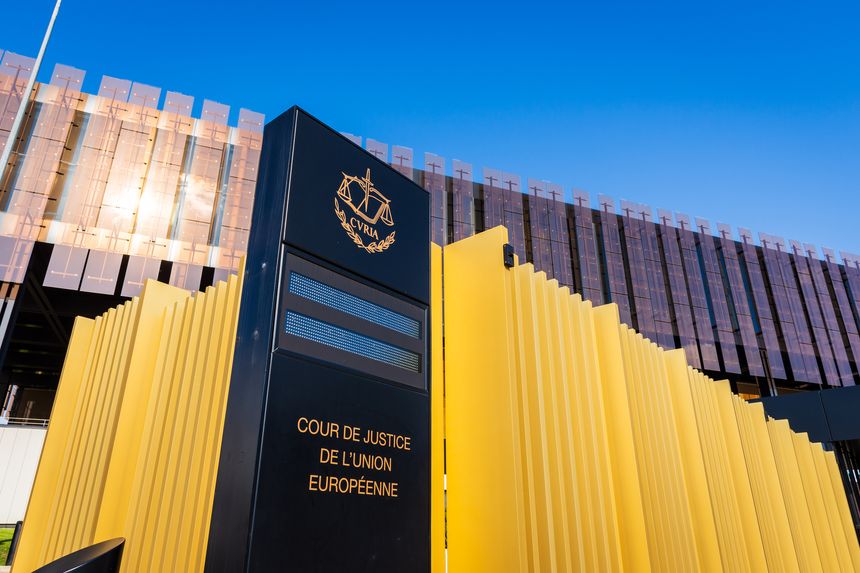
Luxembourg, Luxembourg - Sept. 17, 2024: Sign of the Court of Justice of the European Union (CJEU), the judicial institution of the European Union, in front of the Palais in the Kirchberg district.
1

Get in touch

Avatar
Yves Botteman
Partner
Avatar
Julien Haverals
Associate

Get in touch

Avatar
Yves Botteman
Partner
Avatar
Julien Haverals
Associate
1

On 9 July 2026, the European Court of Justice (ECJ or the court) ruled that sports federation regulations governing players' agents may, under certain conditions, fall outside the scope of the EU's prohibition on anti-competitive agreements. The judgment in ROGON and Others (C-428/23) carries significant implications for agents and intermediaries across all professional sports.

Key takeaways

  • Federations can regulate agents – despite their status of third parties not associated with the federation – provided their rules pursue legitimate public interest objectives and are proportionate and strictly necessary to achieve those objectives.
  • The restriction-by-object threshold is critical – As confirmed by the ECJ in Rogon, citing Superleague (paragraphs 183–186), rules amounting to a restriction of competition by object – such as price-fixing or market foreclosure – cannot benefit from the exception. While the concept of “restriction by object” does not apply per se under Article 102 TFEU, Superleague confirmed that certain conducts are, by their very nature, incompatible with Article 102 and therefore cannot be justified by reference to any legitimate objective of general interest. Federations should be mindful of this parallel when assessing conduct that may violate both EU Treaty provisions. Further developments in this area are expected later this month once the ECJ delivers its ruling in RRC Sports.
  • These principles are applicable to all professional sports.
  • Agents should scrutinise federation rules carefully: Illegitimate or disproportionate restrictions imposed by sports federations may be challenged under Article 101(1) TFEU.

Background

In 2015, the German Football Association (DFB) adopted regulations imposing registration requirements on agents, mandating their submission to DFB, FIFA, and DFL statutes, prohibiting agents from taking a slice on future transfer proceeds by the club, banning commissions for transfers involving minors, and requiring disclosure of agent remuneration. ROGON, a German player consultancy, challenged these rules as violating Article 101(1) TFEU. The Bundesgerichtshof referred two questions to the ECJ, both exclusively framed under Article 101(1) TFEU: whether the Wouters/Meca-Medina exception could apply to federation rules regulating the services of third parties such as agents, and how that assessment should be conducted. The referring court did not raise questions under Article 102 TFEU dealing with abuses of dominant position.

The ruling

The court confirmed that the DFB's regulations on agents’ activities may fall within the scope of the prohibition of Article 101(1) TFEU where it is cumulatively established that: 

  • the regulated activity – namely agent services provided for consideration relating to the placement of sportspersons – constitutes an economic activity, and therefore the regulation of such activities cannot be exempted as a purely sporting rule;
  • said regulations constitute decisions by an association of undertakings insofar as those regulations affect how its member clubs may make use of agents;
  • they restrict how member clubs make use of input services provided by third-party agents for the transfer of players, and, as such, affect competition between them (either by object or effect); and
  • they affect the EU internal market to the extent that they may impact agents established outside of Germany.

The court next went on to examine the extent to which such regulations may nonetheless be exempt from the Article 101(1) TFEU prohibition by reference to the objective justifications doctrine as set forth by Superleague and Tondela.  The court held that the application of the doctrine is subject to strict conditions: the regulations must: 

  1. not constitute a restriction of competition by object;
  2. pursue legitimate public interest objectives; and
  3. be proportionate – namely, capable of achieving those objectives, not exceeding what is strictly necessary, and not eliminating competition entirely. 

The court makes clear that, in order to benefit from the doctrine, the above case law does not require the sport federations’ regulations to be solely limited in affecting their members, i.e. the clubs. In the professional football ecosystem, clubs, federations, players, and agents must interact and cooperate to ensure the viability, integrity, and attractiveness of the sport, and a federation may, in the pursuit of that legitimate public interest, be justified in adopting restrictive rules affecting how its members may make use of third-party agents.

The court further held that proportionality may be assessed by reference to groups of provisions pursuing a distinct objective, rather than on a provision-by-provision basis. In particular, the court reasoned that where provisions of a regulatory framework pursue different objectives or produce distinct effects, an independent examination of proportionality is required for those various provisions; however, it would be artificial to split up a set of provisions that pursue the same objective or where some provisions are ancillary to others.

Implications beyond football

The court's reasoning is framed in general terms and arguably extends beyond football. Agent activity exists across many disciplines, with international bodies such as FIBA and World Rugby maintaining their own agent frameworks. These bodies should take stock of the ruling and follow how the Bundesgerichtshof will apply the exemption conditions to the specific circumstances of the case, i.e. verifying whether the DFB rules genuinely pursue legitimate objectives, do not amount to a restriction by object and meet the strict necessity and proportionality tests.

The judgment reminds us that rules amounting to a restriction of competition by object cannot benefit from the exception. As the court stated, citing paragraph 186 of Superleague, the exception does not apply in situations involving conduct which reveals a degree of harm to competition that justifies a finding that it has as its very “object” the prevention, restriction or distortion of competition. Rules that are disproportionate or unnecessary are equally excluded. This is consistent with the court's Superleague, ISU and Tondela judgments. Federations must ensure that the measures – that are not of purely sporting nature – are not tantamount to anti-competitive conduct.

Subscribe to our Connections insights Sign-up now

Tags

antitrust and competition

Get in touch

Avatar
Yves Botteman
Partner
Avatar
Julien Haverals
Associate

Get in touch

Avatar
Yves Botteman
Partner
Avatar
Julien Haverals
Associate
Changing tides: How women are shaping the future of maritime
5/15/2026 8:41:55 AM

Changing tides: How women are shaping the future of maritime

By Rebecca Daniels
Rebecca Daniels is a shipping finance lawyer based in London. Working closely with maritime and shipping clients, Rebecca has seen...
6
6

Latest Insights

Notice in a nutshell: FCA proposes to fine individual £99,600 for failure to disclose overseas investigation, sanction and enforcement action
7/7/2026 4:37:00 PM

Notice in a nutshell: FCA proposes to fine individual £99,600 for failure to disclose overseas investigation, sanction and enforcement action

By Katie Stephen Rebecca Dulieu
28
28
CMA publishes draft revised guidance on merger efficiencies
7/2/2026 2:44:24 PM

CMA publishes draft revised guidance on merger efficiencies

By Ian Giles Jamie Cooke Mark Tricker Jack Jeffries Mark Daniels +2 more...

Show less

24
24
Level up: The EU upgrades the FDI rulebook
7/2/2026 12:57:38 PM

Level up: The EU upgrades the FDI rulebook

By Violetta Bourt Angelos Vlazakis Anastasios Tsochatzidis
1
14
14

Explore our site

  • About
  • Careers
  • Diversity, Equity & Inclusion
  • People
  • Services
  • Insights
  • News

Key industries

  • Consumer markets
  • Energy, infrastructure and resources
  • Financial institutions
  • Life sciences and healthcare
  • Technology
  • Transport

Locations

  • Global coverage

Norton Rose Fulbright © 2024. All Rights Reserved.

  • Amsterdam
  • ●
  • Athens
  • ●
  • Austin
  • ●
  • Bangkok
  • ●
  • Beijing
  • ●
  • Brisbane
  • ●
  • Brussels
  • ●
  • Calgary
  • ●
  • Canberra
  • ●
  • Casablanca
  • ●
  • Chicago
  • ●
  • Dallas
  • ●
  • Denver
  • ●
  • Dubai
  • ●
  • Düsseldorf
  • ●
  • Frankfurt
  • ●
  • Hamburg
  • ●
  • Hong Kong SAR
  • ●
  • Houston
  • ●
  • Istanbul
  • ●
  • Jakarta*
  • ●
  • London
  • ●
  • Los Angeles
  • ●
  • Luxembourg
  • ●
  • Melbourne
  • ●
  • Mexico City
  • ●
  • Milan
  • ●
  • Minneapolis
  • ●
  • Montréal
  • ●
  • Munich
  • ●
  • Newcastle
  • ●
  • New York
  • ●
  • Ottawa
  • ●
  • Paris
  • ●
  • Perth
  • ●
  • Piraeus
  • ●
  • Québec
  • ●
  • Riyadh*
  • ●
  • San Antonio
  • ●
  • San Francisco
  • ●
  • São Paulo
  • ●
  • Shanghai
  • ●
  • Singapore
  • ●
  • St. Louis
  • ●
  • Sydney
  • ●
  • Tokyo
  • ●
  • Toronto
  • ●
  • Vancouver
  • ●
  • Warsaw
  • ●
  • Washington DC *associate office
  • Legal notices and disclaimers
  • Impressum
  • Standard terms
  • Blog network terms and conditions
  • Cookies policy
  • Privacy notice
  • Website access conditions
  • Fraud alerts
  • Modern Slavery Statements
  • Health plan machine readable files
  • Anti-Facilitation of Tax Evasion Statement
  • Suppliers
  • History
  • Remote access
  • Sitemap
Offices and locations

Norton Rose Fulbright © 2024. All Rights Reserved.

  • Amsterdam
  • ●
  • Athens
  • ●
  • Austin
  • ●
  • Bangkok
  • ●
  • Beijing
  • ●
  • Brisbane
  • ●
  • Brussels
  • ●
  • Calgary
  • ●
  • Canberra
  • ●
  • Casablanca
  • ●
  • Chicago
  • ●
  • Dallas
  • ●
  • Denver
  • ●
  • Dubai
  • ●
  • Düsseldorf
  • ●
  • Frankfurt
  • ●
  • Hamburg
  • ●
  • Hong Kong SAR
  • ●
  • Houston
  • ●
  • Istanbul
  • ●
  • Jakarta*
  • ●
  • London
  • ●
  • Los Angeles
  • ●
  • Luxembourg
  • ●
  • Melbourne
  • ●
  • Mexico City
  • ●
  • Milan
  • ●
  • Minneapolis
  • ●
  • Montréal
  • ●
  • Munich
  • ●
  • Newcastle
  • ●
  • New York
  • ●
  • Ottawa
  • ●
  • Paris
  • ●
  • Perth
  • ●
  • Piraeus
  • ●
  • Québec
  • ●
  • Riyadh*
  • ●
  • San Antonio
  • ●
  • San Francisco
  • ●
  • São Paulo
  • ●
  • Shanghai
  • ●
  • Singapore
  • ●
  • St. Louis
  • ●
  • Sydney
  • ●
  • Tokyo
  • ●
  • Toronto
  • ●
  • Vancouver
  • ●
  • Warsaw
  • ●
  • Washington DC *associate office
Policies and disclaimers
  • Legal notices and disclaimers
  • Impressum
  • Standard terms
  • Blog network terms and conditions
  • Cookies policy
  • Privacy notice
  • Website access conditions
  • Fraud alerts
  • Modern Slavery Statements
  • Health plan machine readable files
  • Anti-Facilitation of Tax Evasion Statement
  • Suppliers
  • History
  • Remote access
  • Sitemap
Visit our global site, or select a location
North America
  • Canada (English)
  • Canada (Français)
  • United States
Latin America
Europe
  • Belgium
  • Deutschland (Deutsch)
  • France
  • Germany (English)
  • Greece
  • Italy
  • Luxembourg
  • Poland
  • The Netherlands
  • Turkey
  • United Kingdom
Middle East
Africa
  • Morocco
Asia Pacific
  • Australia
  • China
  • Hong Kong SAR
  • Indonesia
  • Japan
  • Singapore
  • Thailand
Regional practices
  • India
  • Israel
  • Korea
  • Marshall Islands
  • Nordic region
  • Pakistan
  • Vietnam