

This browser is not actively supported anymore. For the best passle experience, we strongly recommend you upgrade your browser.
Norton Rose Fulbright logo
  • Global
  • About
    • Our firm
      • Clients
      • Global coverage
      • Vision, culture and people
      • Governance structure
      • Risk management
      • NRF Transform
      • Alumni
    • Diversity, Equity & Inclusion
      • Strategy, goals and priorities
      • Governance and policy
      • Resource groups
    • Responsible business
      • Volunteering
      • Fundraising
      • Sustainable practice
      • Global charitable initiatives
      • Responsible use of AI
  • People
  • Services
    • Services A-Z
    • Key industries
      • Consumer markets
      • Energy, infrastructure and resources
      • Financial institutions
      • Life sciences and healthcare
      • Technology
      • Transport
    • Practices
      • Antitrust and competition
      • Banking and finance
      • Climate change and sustainability
      • Corporate, M&A and securities
      • Cybersecurity and data privacy
      • Employment and labor
      • Energy
      • Environmental, social and governance (ESG)
      • Financial services and regulation
      • Intellectual property
      • Litigation and disputes
      • Projects
      • Real estate
      • Regulation and investigations
      • Restructuring
      • Risk advisory
      • Tax
    • Practices
      • Antitrust and competition
      • Banking and finance
      • Climate change and sustainability
      • Corporate, M&A and securities
      • Cybersecurity and data privacy
      • Employment and labor
      • Energy
      • Environmental, social and governance (ESG)
      • Financial services and regulation
      • Intellectual property
      • Litigation and disputes
      • Projects
      • Real estate
      • Regulation and investigations
      • Restructuring
      • Risk advisory
      • Tax
      • Banking and finance
      • Corporate, M&A and securities
      • Employment and labor
      • Environmental, social and governance (ESG)
      • Intellectual property
      • Projects
      • Regulation and investigations
      • Risk advisory
    • NRF Transform
    • Transform image

      Find out more
  • Insights
    • Publications Podcasts Blogs
    • Webinars and events Videos
    • Professional development Resources and tools
    • colorful light particles
      Trending topics
      • Artificial intelligence
      • Data centers
      • Energy transition
      • International trade and tariffs
    • Trending topics
      • Artificial intelligence
      • Data centers
      • Energy transition
      • International trade and tariffs
  • News
    • Press releases
    • Market recognitions
    • Media information
  • Locations
  • Careers
    • Graduates and students
    • Search current vacancies
  • Careers
    • Graduates and students
    • Search current vacancies
  • Change
  • Global
    • global site
    • North America
      • Canada (English)
      • Canada (Français)
      • United States
    • Latin America
    • Europe
      • Belgium
      • Deutschland (Deutsch)
      • France
      • Germany (English)
      • Greece
      • Italy
      • Luxembourg
      • Poland
      • The Netherlands
      • Turkey
      • United Kingdom
    • Middle East
    • Africa
      • Morocco
    • Asia Pacific
      • Australia
      • China
      • Hong Kong SAR
      • Indonesia
      • Japan
      • Singapore
      • Thailand
    • Regional practices
      • India
      • Israel
      • Korea
      • Marshall Islands
      • Nordic region
      • Pakistan
      • Vietnam
Lake in the forest

Connections

Insights, perspectives and viewpoints from our lawyers on topical issues

All Posts Subscribe
print-logo
4/24/2026 11:36:53 AM | 3 minute read

TICEF: The EU’s latest crisis response framework

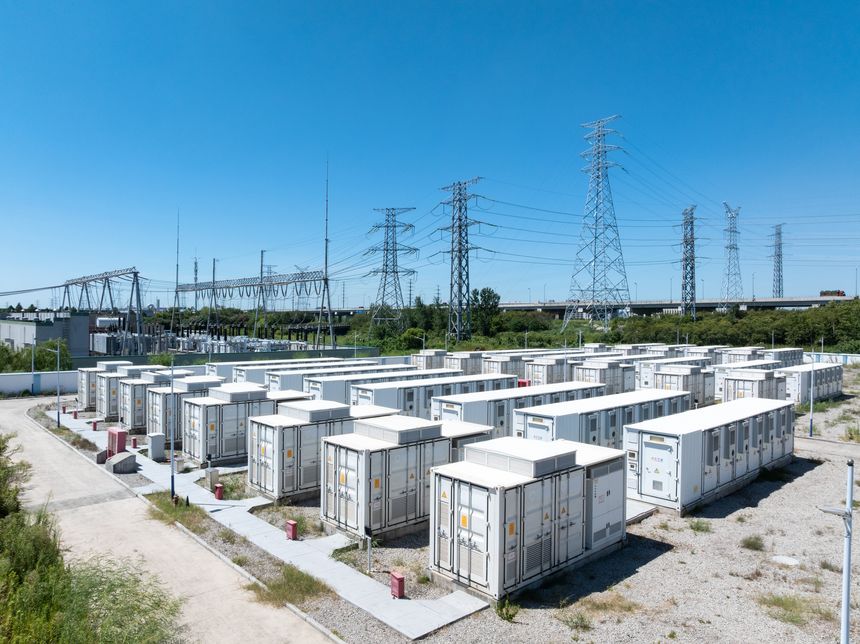
Aerial view of battery energy storage systems under a clear blue sky
1

Get in touch

Avatar
Alexandra Rogers
Head of Brussels; Partner
Avatar
Katarzyna Berestecka
Senior Associate
Avatar
Anastasios Tsochatzidis
Associate

Get in touch

Avatar
Alexandra Rogers
Head of Brussels; Partner
Avatar
Katarzyna Berestecka
Senior Associate
Avatar
Anastasios Tsochatzidis
Associate
1

The European Commission’s proposed Temporary Iran Crisis Energy Framework (TICEF) continues the pattern of crisis-reactive EU State aid measures – but will Member States use it?

On 15 April 2026, Politico published a draft proposal for a Temporary Iran Crisis Energy Framework (TICEF) (see “Another crisis is here: Meet the TICEF” - POLITICO Pro). The framework aims to equip Member States with State aid tools to mitigate the impact of the de facto closure of the Strait of Hormuz and the resulting sharp increases in global prices for oil, gas and fertilisers (see para 1of TICEF).  For companies operating in the most exposed sectors (notably agriculture and fertilisers, fisheries, road transport, and maritime transport), TICEF could offer a limited but potentially important source of relief. Much, however, will depend on whether Member States choose to implement national support schemes, and how quickly they do so. 

Businesses should therefore engage early with national authorities to assess whether and when support may become available, and be ready to act swiftly once schemes are announced.

A familiar pattern

TICEF follows a now well-established EU playbook of reactive crisis frameworks. It sits alongside a succession of temporary measures: the COVID-19 Temporary Crisis Framework (TCF), subsequently amended by the Temporary Crisis and Transition Framework (TCTF) in response to Russia’s invasion of Ukraine, and later replaced by the Clean Industrial Deal State Aid Framework (CISAF) – intended as a more permanent framework valid until 2030. Once again, however, circumstances have forced the European Commission (EC) back into crisis mode.

Reflecting the severity and immediacy of the situation, TICEF places markedly less emphasis on longer-term strategic and environmental objectives (albeit with the welcome reiteration of commitments around the development of European railway infrastructure). The clear priority is operational continuity in the most exposed sectors, reflecting the EC’s assessment of the scale and gravity of the disruption.

What does TICEF propose?

TICEF identifies several sectors as particularly vulnerable to fuel price volatility, notably agriculture (including fertilisers and food production), fisheries, road transport, and maritime transport. It proposes price support measures for these sectors, while also allowing a temporary increase in the intensity of energy price support for certain energy-intensive industries already recognized  in the EC’s Guidelines on State aid for climate, environmental protection and energy 2022 (CEEAG) as being at significant risk of relocating outside the Union. 

In particular, the draft framework envisages the following measures:

  1. Temporary price support for agriculture and fisheries, road transport and intra-EU short sea shipping:
    1. Aid of up to 50 percent of additional fuel costs (or fertiliser costs in the case of undertakings in primary production of agricultural or fisheries products).
    2. Aid may be granted in various forms, including grants, tax exemptions, equity injections, repayable advances and guarantees.
    3. Two alternative options:
      • support covering up to 100 percent of additional costs where aid is provided in the form of repayable instruments; or
      • the possibility to convert aid provided as repayable instruments into grants by mid-2027, subject to a cap of 50 percent of the additional costs.
    4. The framework foresees national aid schemes meeting TICEF criteria, rather than individual measures.

The TICEF proposal also allows Member States to provide advance payments prior to the submission of supporting documentation or to grant aid of up to €50,000 on the basis of a general estimate of fuel or fertiliser consumption. In those cases, the crisis impact and energy price exposure would not be verified at beneficiary level.

  1. Temporary amendments to CISAF: 
    1. TICEF allows higher aid intensities for electricity price relief, increasing the ceiling to 70 percent of the average annual wholesale price (compared with 50 percent under CISAF).

      Eligibility for this increased support would not be subject to additional decarbonisation requirements beyond those already applicable under CISAF which sets out the portion of support that needs to be invested in decarbonisation assets.

    2. TICEF also permits cumulation with aid granted under the ETS Guidelines, up to a combined maximum of 50 percent for the same eligible electricity consumption.

Eligibility under CISAF, and therefore under TICEF, is confined to undertakings active in sectors exposed to significant relocation risks outside the EU. This covers the 90 sectors listed in Annex 1 to the CEEAG, ranging from textile and cement manufacturing to battery manufacturing.

But will Member States act?

As experience with CISAF has shown, the practical impact of any framework depends entirely on Member States’ willingness and ability to implement national support schemes. Budgetary constraints and political considerations are likely to remain decisive.

The track record to date is not encouraging. As of 26 March 2025, the EC had approved only 13 aid schemes under CISAF of which 10 concerned net-zero technology development, one addressed industrial decarbonisation, and two related to renewable energy sources. None utilised the electricity price relief provisions.

Notably Poland, one of the Member States experiencing the highest energy prices in the EU, has not adopted any CISAF scheme. Whether it will seize the opportunity offered by the more flexible TICEF rules remains uncertain. 

In addition, while TICEF aims to provide targeted and temporary support, its very short duration may reduce its effectiveness. National scheme design, adoption, and implementation takes time. Unless Member States move swiftly, the window for helping local industries could be narrow.

For businesses operating in affected sectors, the message is clear – engage early with national authorities to understand whether and when support may become available and be prepared to act quickly once schemes are announced.

Subscribe to our Connections insights Sign-up now

Tags

energy and infra, antitrust and competition

Get in touch

Avatar
Alexandra Rogers
Head of Brussels; Partner
Avatar
Katarzyna Berestecka
Senior Associate
Avatar
Anastasios Tsochatzidis
Associate

Get in touch

Avatar
Alexandra Rogers
Head of Brussels; Partner
Avatar
Katarzyna Berestecka
Senior Associate
Avatar
Anastasios Tsochatzidis
Associate
The CMA’s response to heating oil costs
3/13/2026 6:04:57 PM

The CMA’s response to heating oil costs

By Jamie Cooke Ian Giles Caroline Thomas Mark Mills +1 more...

Show less

The government has taken an increasingly tough tone on rising fuel prices following the surge in global oil costs linked to conflict in...
60
60

Latest Insights

Infrastructure community rides wave of AI-fuelled optimism
4/24/2026 4:57:16 PM

Infrastructure community rides wave of AI-fuelled optimism

By Nicolas Sirtoli Jason Moss Andrew Davies
UK National Security and Investment Act: Government proposes updates to sectors subject to mandatory notification
4/24/2026 4:17:45 PM

UK National Security and Investment Act: Government proposes updates to sectors subject to mandatory notification

By Ian Giles Susanna Rogers Jack Jeffries Mark Daniels +1 more...

Show less

2
2
Foreign Investment Control in France: A strategic turning point in 2026?
4/24/2026 11:15:38 AM

Foreign Investment Control in France: A strategic turning point in 2026?

By Karine Montagut Marie-Adélaïde de Fleurieu
4
4

Explore our site

  • About
  • Careers
  • Diversity, Equity & Inclusion
  • People
  • Services
  • Insights
  • News

Key industries

  • Consumer markets
  • Energy, infrastructure and resources
  • Financial institutions
  • Life sciences and healthcare
  • Technology
  • Transport

Locations

  • Global coverage

Norton Rose Fulbright © 2024. All Rights Reserved.

  • Amsterdam
  • ●
  • Athens
  • ●
  • Austin
  • ●
  • Bangkok
  • ●
  • Beijing
  • ●
  • Brisbane
  • ●
  • Brussels
  • ●
  • Calgary
  • ●
  • Canberra
  • ●
  • Casablanca
  • ●
  • Chicago
  • ●
  • Dallas
  • ●
  • Denver
  • ●
  • Dubai
  • ●
  • Düsseldorf
  • ●
  • Frankfurt
  • ●
  • Hamburg
  • ●
  • Hong Kong SAR
  • ●
  • Houston
  • ●
  • Istanbul
  • ●
  • Jakarta*
  • ●
  • London
  • ●
  • Los Angeles
  • ●
  • Luxembourg
  • ●
  • Melbourne
  • ●
  • Mexico City
  • ●
  • Milan
  • ●
  • Minneapolis
  • ●
  • Montréal
  • ●
  • Munich
  • ●
  • Newcastle
  • ●
  • New York
  • ●
  • Ottawa
  • ●
  • Paris
  • ●
  • Perth
  • ●
  • Piraeus
  • ●
  • Québec
  • ●
  • Riyadh*
  • ●
  • San Antonio
  • ●
  • San Francisco
  • ●
  • São Paulo
  • ●
  • Shanghai
  • ●
  • Singapore
  • ●
  • St. Louis
  • ●
  • Sydney
  • ●
  • Tokyo
  • ●
  • Toronto
  • ●
  • Vancouver
  • ●
  • Warsaw
  • ●
  • Washington DC *associate office
  • Legal notices and disclaimers
  • Impressum
  • Standard terms
  • Blog network terms and conditions
  • Cookies policy
  • Privacy notice
  • Website access conditions
  • Fraud alerts
  • Modern Slavery Statements
  • Health plan machine readable files
  • Anti-Facilitation of Tax Evasion Statement
  • Suppliers
  • History
  • Remote access
  • Sitemap
Offices and locations

Norton Rose Fulbright © 2024. All Rights Reserved.

  • Amsterdam
  • ●
  • Athens
  • ●
  • Austin
  • ●
  • Bangkok
  • ●
  • Beijing
  • ●
  • Brisbane
  • ●
  • Brussels
  • ●
  • Calgary
  • ●
  • Canberra
  • ●
  • Casablanca
  • ●
  • Chicago
  • ●
  • Dallas
  • ●
  • Denver
  • ●
  • Dubai
  • ●
  • Düsseldorf
  • ●
  • Frankfurt
  • ●
  • Hamburg
  • ●
  • Hong Kong SAR
  • ●
  • Houston
  • ●
  • Istanbul
  • ●
  • Jakarta*
  • ●
  • London
  • ●
  • Los Angeles
  • ●
  • Luxembourg
  • ●
  • Melbourne
  • ●
  • Mexico City
  • ●
  • Milan
  • ●
  • Minneapolis
  • ●
  • Montréal
  • ●
  • Munich
  • ●
  • Newcastle
  • ●
  • New York
  • ●
  • Ottawa
  • ●
  • Paris
  • ●
  • Perth
  • ●
  • Piraeus
  • ●
  • Québec
  • ●
  • Riyadh*
  • ●
  • San Antonio
  • ●
  • San Francisco
  • ●
  • São Paulo
  • ●
  • Shanghai
  • ●
  • Singapore
  • ●
  • St. Louis
  • ●
  • Sydney
  • ●
  • Tokyo
  • ●
  • Toronto
  • ●
  • Vancouver
  • ●
  • Warsaw
  • ●
  • Washington DC *associate office
Policies and disclaimers
  • Legal notices and disclaimers
  • Impressum
  • Standard terms
  • Blog network terms and conditions
  • Cookies policy
  • Privacy notice
  • Website access conditions
  • Fraud alerts
  • Modern Slavery Statements
  • Health plan machine readable files
  • Anti-Facilitation of Tax Evasion Statement
  • Suppliers
  • History
  • Remote access
  • Sitemap
Visit our global site, or select a location
North America
  • Canada (English)
  • Canada (Français)
  • United States
Latin America
Europe
  • Belgium
  • Deutschland (Deutsch)
  • France
  • Germany (English)
  • Greece
  • Italy
  • Luxembourg
  • Poland
  • The Netherlands
  • Turkey
  • United Kingdom
Middle East
Africa
  • Morocco
Asia Pacific
  • Australia
  • China
  • Hong Kong SAR
  • Indonesia
  • Japan
  • Singapore
  • Thailand
Regional practices
  • India
  • Israel
  • Korea
  • Marshall Islands
  • Nordic region
  • Pakistan
  • Vietnam