
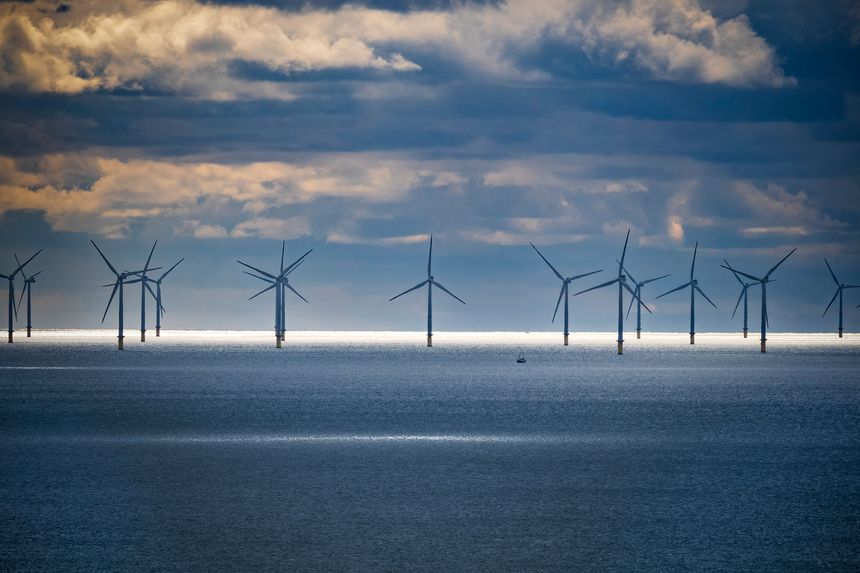


The Philippine Department of Energy (DOE) has launched GEAP Round 5 (GEA‑5), the country’s first auction round dedicated exclusively to offshore wind. The round offers 3,300 MW of fixed‑bottom offshore wind capacity with targeted commercial operations between 2028 and 2030, and is supported by a ceiling (reserve) price of PHP 11.00/kWh. GEA‑5 represents a material evolution of the Philippines’ auction framework, with targeted refinements aimed at improving bankability and aligning more closely with international offshore wind practice.
Overview of GEAP Round 5
GEA‑5 is conducted under the DOE’s Green Energy Auction Programme, with support payments made through the Green Energy Tariff (GET) over a 20‑year term. Winning bidders will be entitled to receive the GET for energy delivered, administered through TransCo and funded via the GEA‑All Fund, which aggregates consumer charges and market revenues collected.
Unlike earlier GEAP rounds, GEA‑5 is the first and only auction round to date that specifically covers offshore wind. The auction format remains pay‑as‑bid, with bids ranked on price subject to satisfaction of technical and eligibility requirements, and constrained by the PHP 11.00/kWh ceiling.
Enhanced Terms of Reference: Key bankability improvements
Having regard to the unique characteristics of offshore wind projects, the GEA‑5 Terms of Reference incorporate several refinements when compared with GEAP Round 4 and earlier auctions, many of which respond directly to lender and developer feedback, including:
- Earlier offtake certainty: The Renewable Energy Payment Agreement (REPA) is now executed upon award, rather than at commercial operations, providing earlier revenue certainty for financing purposes.
- Lender protections: Express step‑in rights are recognised, allowing financiers to cure defaults and preserve project value in the event of developer distress.
- Delay and force majeure relief: The framework provides clearer allowances for force majeure and system‑related delays, including transmission or government‑controlled infrastructure constraints, reducing termination risk and enabling compensation for events beyond developer control.
- Tariff indexation: Limited tariff indexation mechanisms have been incorporated to address the impact of inflation during the construction period.
- Reduced security burden: Performance bond requirements have been materially reduced, easing upfront balance sheet pressure during development.
- Infrastructure coordination: Bidders must submit a development roadmap, intended to support coordination with grid, port and ancillary infrastructure planning - an issue of particular importance for first‑of‑a‑kind offshore wind projects in the Philippines.
- Foreign ownership clarity: Offshore wind projects are now able to proceed on a 100% foreign‑owned basis, removing a structural constraint that previously complicated international investment and financing.
Taken together, these measures represent an incremental but meaningful shift toward a more financeable and internationally recognisable offshore wind auction framework.
Ceiling price and regional price context
The PHP 11.00/kWh ceiling price under GEA‑5 (approximately USD 0.18–0.20/kWh) should be understood in the context of the Philippines’ position as an early‑stage offshore wind market. Headline offshore wind prices across Asia vary significantly depending on the support mechanism used, the allocation of market and grid risk, project maturity and local supply‑chain depth.
By way of comparison (fixed‑bottom offshore wind only):
| Market | Indicative Support Level | Approx. USD/kWh | Notes |
|---|---|---|---|
| Philippines (GEA‑5) | PHP 11.00/kWh (ceiling) | ~0.18–0.20 | First offshore‑only auction; pay‑as‑bid GET |
| Taiwan (early FiT) | ~NT$5.5/kWh | ~0.17–0.18 | Initial market entry support |
| South Korea | ~KRW 170,000–180,000/MWh | ~0.11–0.12 | Auction/RPS‑linked pricing |
| Japan | ~JPY 12–16/kWh | ~0.10–0.13 | Fixed‑bottom auction |
Lower prices in more mature markets typically reflect deeper supply chains, lower cost of capital and greater regulatory assumption of non‑market risks (including grid and site readiness). In contrast, higher support levels in early‑stage markets have historically been used to offset first‑of‑a‑kind risk, infrastructure gaps and permitting complexity. Against this backdrop, the Philippine ceiling price is intended to function less as a forecast clearing price and more as a bankability backstop, calibrated to encourage participation while maintaining competitive discipline.
Timeline and next steps
Following confirmation of the ceiling price, the DOE has provided an indicative 2026 auction timetable. Bidder registration is expected to open in Q2 2026, followed by pre‑bid consultations shortly thereafter. Bid submission is anticipated for mid‑2026, with awards targeted in the second half of 2026, subject to completion of the qualification and evaluation processes. Qualified bidders must demonstrate site control, technical capability and readiness to meet committed delivery dates.
/Passle/6182994d49b2340a4c485aab/SearchServiceImages/2026-07-21-16-47-56-208-6a5fa2bc70261d54eb614603.jpg)
/Passle/6182994d49b2340a4c485aab/SearchServiceImages/2026-10-07-15-32-28-824-6ac6660c8f60cb75fddf5ad0.jpg)
/Passle/6182994d49b2340a4c485aab/SearchServiceImages/2026-09-28-15-44-06-363-6aba8b46fe1eb4871994c3c0.jpg)
/Passle/6182994d49b2340a4c485aab/SearchServiceImages/2026-09-28-09-47-39-235-6aba37bb9a7b7dedf3b51e3e.jpg)